Contact our team for professional guidance and solutions.
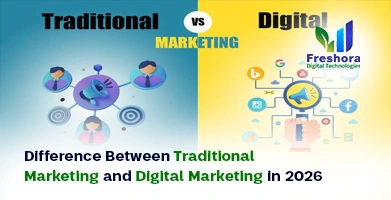
What is the exact difference between digital and traditional marketing approaches?
Traditional marketing uses offline channels like print and TV to reach broad, local audiences with a one-way message, unlike digital media that allows for interaction.
Digital marketing leverages online platforms to precisely target specific demographics, track real-time analytics, and build interactive customer relationships, complementing traditional marketing efforts.
Many businesses waste their budget by choosing the wrong medium for their specific goals.
Understanding the distinct mechanics behind these two approaches prevents expensive missteps and missed opportunities in both traditional advertising and digital marketing.
You must align your chosen channels with how your ideal buyers actually consume information.
Traditional media still plays a role in marketing, but its effectiveness is often measured against digital marketing offers.
Digital marketing excels in generating precise targeting, while traditional marketing relies on mass-market distribution to generate broad visibility.
Digital advertising relies on social media platforms to enhance visibility and reach a global audience in the digital landscape.
Targets individual user profiles based on specific online behaviors, which digital marketing refers to as audience segmentation.
The former pushes messages outward to general populations, whereas the latter pulls highly interested consumers inward using precise search intent.
Traditional marketing refers to conventional methods that lean heavily on outbound marketing, interrupting audiences during a television show or a morning commute.
Digital strategies thrive on Inbound marketing is increasingly becoming a preferred strategy compared to traditional marketing methods, highlighting the key differences between traditional marketing and digital marketing.
Capturing user intent exactly when they actively search for solutions online is a key advantage of digital marketing platforms.
This fundamental shift from interruption to assistance in marketing campaigns dictates how you budget, measure, and scale your strategies.
You measure offline marketing success through broad estimates like localized foot traffic and quarterly sales bumps.
Online marketing provides exact attribution, tracking a user's exact journey from their first ad click all the way to their final purchase checkout.
Accurate digital marketing offers precise targeting capabilities.
marketing analytics Eliminate the guesswork from your budget allocation with performance marketing strategies that excel in the digital world.
A physical billboard gives you estimated daily vehicle impressions, but an online campaign reveals your exact metrics, enhancing your marketing approach.
Conversion rate is a crucial metric that digital marketing depends on for assessing campaign effectiveness, particularly in comparison to traditional marketing campaigns.
and cost per acquisition, which is crucial when comparing the choice between traditional marketing and digital marketing.
This precise, granular data allows marketers to accurately prove their Return on investment is a critical metric that digital marketing has become focused on to measure success effectively.
Digital marketing involves the ability to analyze data and pivot failing campaigns in real-time, unlike traditional methods.
Digital platforms allow advertisers to segment users by granular data points like job title, past purchases, and specific niche interests.
Offline campaigns target broader demographics based on regional geography, household income averages, and general publication readership, highlighting the key differences between traditional and digital marketing.
Analyzing online performance marketing data is vital for optimizing campaigns effectively in the digital space.
Consumer behavior is influenced by both traditional marketing methods and innovative digital strategies in the world of marketing.
Tells you exactly what your buyers care about right now, especially when comparing insights from traditional marketing vs digital marketing tools like Google Analytics, which digital marketing allows businesses to utilize.
By ruthlessly narrowing your focus, you can leverage traditional marketing offers to reach specific audiences effectively.
The target audience for traditional marketing campaigns often differs from that of digital marketing platforms like social media.
You avoid paying for impressions from people who will never buy your products and services through targeted digital marketing.
The ultimate goal is putting the right marketing message in front of the right person at the exact moment of need using a mix of traditional and digital marketing techniques.
Traditional marketing methods build consumer trust through repetitive exposure on familiar, highly vetted local media channels, which can be contrasted with the immediacy that digital marketing allows.
Digital campaigns optimize exposure dynamically, capping how often a specific user sees a digital ad to prevent audience fatigue.
Balancing reach and frequency is critical for both mediums to avoid wasting ad spend, especially when considering the choice between traditional and digital platforms.
Too little exposure means your brand is forgotten; too much exposure breeds annoyance and ad blindness, highlighting the differences between traditional and digital marketing strategies.
Algorithms handle this capping automatically online, while conventional methods such as print ads and radio ads require careful, manual media buying schedules.
Offline marketing creates passive brand recognition through repeated visual or audio exposure without immediate user feedback.
Online marketing demands active participation, encouraging users to comment, share, and interact directly with the brand's published content.
You can build initial brand awareness Traditional marketing refers to conventional methods that can be incredibly fast with a prime-time television spot or a high-traffic highway billboard, showcasing the effectiveness of traditional ads.
However, maintaining long-term customer engagement is crucial in both traditional and digital marketing strategies.
Digital marketing requires a continuous, two-way dialogue to engage a broad audience effectively.
Tactics like email marketing and PPC can significantly enhance your overall strategy in the digital world.
Social media marketing is an essential component of modern marketing campaigns that enhance customer engagement on platforms like social media in the digital landscape.
and Content marketing is a vital component of digital marketing that helps promote products effectively.
Transform passive viewers into active community members and vocal brand advocates through effective forms of marketing.
The most effective marketing strategies combine the broad, trust-building power of traditional channels, like TV commercials and print ads, with the precise targeting and tracking of digital platforms.
You capture mass attention offline and methodically convert that initial interest into measurable sales online through effective marketing campaigns.
Driving traffic from a physical magazine ad to a dedicated online landing page via a QR code is a perfect hybrid approach, blending traditional marketing with digital media on platforms like social media.
When users arrive online, robust digital marketing tools like SEO and social media analytics come into play, enhancing the digital landscape.
Search Engine Optimization Digital marketing ensures they find exactly what they were looking for without friction, promoting products and services seamlessly in the digital space.
If navigating this technical transition feels overwhelming, partnering with experts like Freshora Digital Technologies guarantees your digital infrastructure captures and converts the offline interest you generate.
· Define your primary objective: Use traditional marketing strictly for broad local awareness and digital channels for direct response and lead capture, emphasizing the strengths of each type of marketing.
· Establish clear tracking mechanisms: Assign unique URLs, custom phone numbers, or promo codes to offline ads to measure their direct digital impact.
· Align your messaging: Ensure the aesthetic, tone, and specific offer on your physical mailer matches your online landing page perfectly, especially when considering digital marketing offers.
The ultimate difference between traditional marketing and digital marketing lies in tracking capability, audience targeting, and real-time interaction, which are key aspects of both traditional marketing and digital analytics.
You no longer have to guess which half of your advertising budget is actually working, thanks to digital marketing tools like analytics platforms.
Evaluate your current strategy today, identify your data blind spots, and start shifting your resources toward the integrated channels that provide measurable, sustainable growth through both traditional and digital marketing.
In the fast-moving commercial and tourist landscape of Tiruchirappalli, the car rental industry is h... Read More
Blog Summary In the competitive landscape of Trichy, 85% of dental patients search online before bo... Read More

Blog Summary In the booming real estate market of Trichy, interior designers face intense competiti... Read More
Our expert will call you shortly to understand your needs and help grow your business.
Get exclusive digital marketing tips, SEO insights, web & app updates, and job opportunities delivered straight to your inbox.
Join our WhatsApp channel for instant digital marketing tips, SEO insights, web & app updates, and latest job opportunities.
Join NowFreshora Digital Technologies proudly serves businesses across Tiruchirappalli (Trichy), including Cantonment, Puthur, Thillai Nagar, Palakarai, Subramaniyapuram, Mela Chinthamani, Woraiyur, KK Nagar, Karumandapam, Crawford, Edamalaipatti Pudur (EMP), Kattur, Airport Area, Ariyamangalam, Panjappur, Thuvakudi, Tiruverumbur, BHEL Township, Srirangam, Thiruvanaikaval, Samayapuram, No.1 Tollgate, Central Bus Stand Area, and Chathiram Bus Stand Area.
We also serve clients across Tamil Nadu, India, and globally in Singapore, the UAE, Saudi Arabia, Canada, Australia, the United Kingdom, and the United States, delivering innovative Website Development, Mobile App Development, Software Development, SEO, Google Business Profile Management, and Digital Marketing solutions that help businesses grow and succeed in the digital world.
