
Contact our team for professional guidance and solutions.
Summary: Cloud technology helps businesses reduce operational costs, improve scalability, strengthen cybersecurity, and support remote collaboration through flexible digital infrastructure.It enables faster innovation, secure data backup, AI integration, and better customer experiences.Businesses adopting cloud solutions achieve higher productivity, operational efficiency, and sustainable long-term digital growth in 2025.
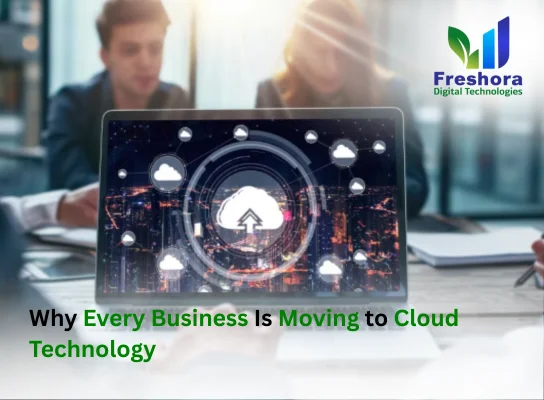
Cloud technology has become an essential part of modern business operations, reshaping how companies store data, manage teams, run applications, and deliver services. In 2025, the rapid growth of digital transformation, remote work environments, automation, and customer expectations has pushed businesses to adopt cloud tech as a core strategy. Whether it’s a small startup or a large enterprise, cloud systems offer unmatched flexibility, powerful security, and cost-efficient tools that help businesses stay competitive and future-ready.
Traditional IT systems come with high maintenance costs, limited scalability, and slow performance. Cloud technology eliminates these weaknesses through scalable digital infrastructure, AI-powered cloud platforms, real-time collaboration tools, and secure remote access systems. Businesses can access powerful applications from anywhere, improve operations instantly, and reduce the burden of hardware-based systems. As markets continue to evolve, cloud adoption is no longer optional it is a necessity for growth, survival, and digital relevance.
This article explains why every business needs cloud tech, highlighting the advantages that drive efficiency, innovation, and long-term success.
Cloud systems cut down the biggest expenses of traditional IT.
Examples include:
· No need to buy costly physical servers.
· Lower maintenance and repair expenses.
· Paying only for the resources used.
This makes cloud adoption a cost-effective choice for all businesses.
Businesses can adjust their resources instantly as they grow.
Examples include:
· Expanding storage based on company needs.
· Handling customer traffic without downtime.
· Scaling applications across multiple locations.
Cloud scalability supports fast, flexible business growth.
Modern cloud platforms include advanced security features.
Examples include:
· AI-based threat detection to prevent cyberattacks.
· Strong data encryption for sensitive information.
· Multi-layer access control for secure login.
Enhanced security reduces risks and protects business assets.
Cloud tools improve communication and teamwork across departments.
Examples include:
· Real-time document sharing for faster collaboration.
· Cloud-based project management tools.
· Remote access to essential apps and files.
These features help teams work efficiently from any location.
Businesses can launch new services and updates quickly.
Examples include:
· Setting up applications within minutes.
· Testing new features with cloud sandboxes.
· Integrating new technologies effortlessly.
Cloud technology accelerates innovation and reduces development time.
Cloud platforms support modern work expectations.
Examples include:
· Secure login from any device.
· Cloud communication tools for virtual meetings.
· Centralized document storage for global teams.
This ensures smooth and reliable remote operations.
Cloud ensures data is always safe and recoverable.
Examples include:
· Automatic backups in multiple locations.
· Fast recovery systems during outages.
· Protected storage that prevents data loss.
This strengthens business continuity and reliability.
Future businesses depend on smart, automated workflows.
Examples include:
· AI-driven analytics for performance insight.
· Automation tools that reduce manual work.
· Machine learning features built into cloud apps.
Cloud and AI together increase efficiency and intelligence.
Businesses can serve customers faster and more efficiently.
Examples include:
· Quick-loading websites and apps.
· Live service tools powered by cloud.
· Personalized customer interactions using cloud analytics.
Better digital experiences lead to higher customer satisfaction.
Cloud platforms evolve constantly with new features and updates.
Examples include:
· Automatic upgrades without extra cost.
· Compatibility with emerging technologies.
· Flexible tools that adapt to new business needs.
Cloud helps businesses stay modern and competitive.
Cloud tech helps businesses:
· Reduce expenses
· Improve security
· Support teamwork
· Scale quickly
· Innovate faster
· Prevent data loss
· Strengthen digital presence
· Stay future-ready
It has become the foundation of business success in the digital era.
Cloud technology is essential for every business that wants to move faster, grow smarter, and operate securely in 2025. With benefits like cost savings, advanced security, improved productivity, and powerful scalability, cloud tech supports long-term digital transformation and sustainable business growth.
Freshora Digital Technologies helps companies adopt cloud solutions with expert migration services, secure cloud infrastructure, automation support, and advanced cloud management tools. Their cloud expertise ensures smooth operations, stronger performance, and long-term business success. To explore how Freshora Digital Technologies can transform your business with cloud technology.


Summary: Security automation improves threat response speed by enabling real-time detection, instant... Read More

Introduction In today’s digital business environment, organizations rely on multiple technolo... Read More

Summary: Cloud optimisation improves operational cost control by eliminating unused resources, right... Read More
Our expert will call you shortly to understand your needs and help grow your business.
Get exclusive digital marketing tips, SEO insights, web & app updates, and job opportunities delivered straight to your inbox.
Join our WhatsApp channel for instant digital marketing tips, SEO insights, web & app updates, and latest job opportunities.
Join NowFreshora Digital Technologies proudly serves businesses across Tiruchirappalli (Trichy), including Cantonment, Puthur, Thillai Nagar, Palakarai, Subramaniyapuram, Mela Chinthamani, Woraiyur, KK Nagar, Karumandapam, Crawford, Edamalaipatti Pudur (EMP), Kattur, Airport Area, Ariyamangalam, Panjappur, Thuvakudi, Tiruverumbur, BHEL Township, Srirangam, Thiruvanaikaval, Samayapuram, No.1 Tollgate, Central Bus Stand Area, and Chathiram Bus Stand Area.
We also serve clients across Tamil Nadu, India, and globally in Singapore, the UAE, Saudi Arabia, Canada, Australia, the United Kingdom, and the United States, delivering innovative Website Development, Mobile App Development, Software Development, SEO, Google Business Profile Management, and Digital Marketing solutions that help businesses grow and succeed in the digital world.


