
Contact our team for professional guidance and solutions.
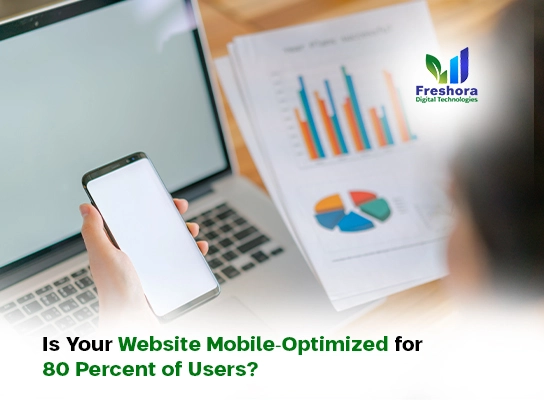
Today, more than 70 to 80 percent of website visitors access businesses through mobile devices.
They search for services while traveling, during meetings, or while making quick decisions. Searches such as:
Are primarily performed on smartphones.
If your website is not fully mobile-optimized, you are losing a significant portion of potential enquiries.
Mobile optimization is no longer optional.
It directly impacts user experience, search engine optimization ranking, Google Maps visibility, and conversion rate.
The question is clear.
Is your website built for desktop display only, or is it engineered for mobile performance where most customers interact?
Search engines use mobile-first indexing.
This means Google evaluates the mobile version of your website before the desktop version when determining ranking.
If your mobile website:
Your search ranking can decline.
Lower ranking reduces organic visibility.
Reduced visibility decreases traffic.
Less traffic means fewer enquiries.
Mobile performance influences both SEO and lead generation.
Mobile users expect:
If your website requires zooming or horizontal scrolling, visitors exit quickly.
Mobile users are impatient.
Poor experience increases bounce rate.
High bounce rate reduces conversion potential.
Smooth mobile navigation increases time on site.
Longer engagement improves enquiry rate.
Mobile users often browse using varying network speeds.
Heavy websites with:
Load slowly on mobile networks.
Fast loading improves:
Even a one-second improvement in mobile speed can significantly increase lead submissions.
Speed influences profit.
On mobile screens, call-to-action placement is critical.
Buttons must be:
Examples of strong mobile CTAs include:
If users struggle to find or tap buttons, they abandon the site.
Easy interaction increases enquiry potential.
Mobile forms should be shorter than desktop versions.
Avoid:
Ask only essential information:
Simplicity increases submission rate.
Reduced friction improves conversion.
Mobile screens are smaller.
Your content must be structured with:
Cluttered design overwhelms users.
Simple layout improves readability.
Readability increases engagement.
Engagement strengthens conversion.
Mobile users prefer instant communication.
Include:
Immediate communication reduces hesitation.
Fast interaction increases lead quality.
Accessibility improves trust.
Regularly analyze:
If mobile users convert less than desktop users, your mobile experience may need improvement.
Data-driven optimization increases efficiency.
Continuous testing strengthens long-term growth.
Most users who find you through Google Business Profile click your website from their mobile phone.
If the mobile experience is poor, you lose high-intent traffic.
Mobile optimization supports:
Integrated strategy strengthens digital presence.
Consistency improves authority.
If your website is not fully mobile-optimized, you are potentially losing 70 to 80 percent of your traffic.
Mobile performance impacts:
A mobile-optimized website must be:
Mobile experience directly influences business growth.
At Freshora Digital Technologies, we develop high-performance, mobile-optimized, SEO-focused, conversion-driven websites integrated with Google Business Profile alignment, structured local SEO strategy, and advanced analytics systems designed to convert mobile traffic into consistent qualified enquiries.
Executive Summary The website development market in Trichy and Tamil Nadu is experiencing strong gr... Read More
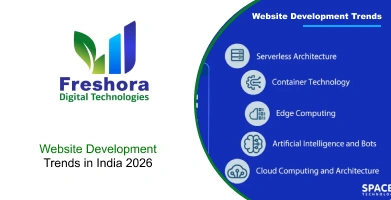
Executive Summary India's digital economy is expanding at an unprecedented pace... Read More

Executive Summary The website development market in Trichy has evolved significantly over the last... Read More
Our expert will call you shortly to understand your needs and help grow your business.
Get exclusive digital marketing tips, SEO insights, web & app updates, and job opportunities delivered straight to your inbox.
Join our WhatsApp channel for instant digital marketing tips, SEO insights, web & app updates, and latest job opportunities.
Join NowFreshora Digital Technologies proudly serves businesses across Tiruchirappalli (Trichy), including Cantonment, Puthur, Thillai Nagar, Palakarai, Subramaniyapuram, Mela Chinthamani, Woraiyur, KK Nagar, Karumandapam, Crawford, Edamalaipatti Pudur (EMP), Kattur, Airport Area, Ariyamangalam, Panjappur, Thuvakudi, Tiruverumbur, BHEL Township, Srirangam, Thiruvanaikaval, Samayapuram, No.1 Tollgate, Central Bus Stand Area, and Chathiram Bus Stand Area.
We also serve clients across Tamil Nadu, India, and globally in Singapore, the UAE, Saudi Arabia, Canada, Australia, the United Kingdom, and the United States, delivering innovative Website Development, Mobile App Development, Software Development, SEO, Google Business Profile Management, and Digital Marketing solutions that help businesses grow and succeed in the digital world.


