Contact our team for professional guidance and solutions.
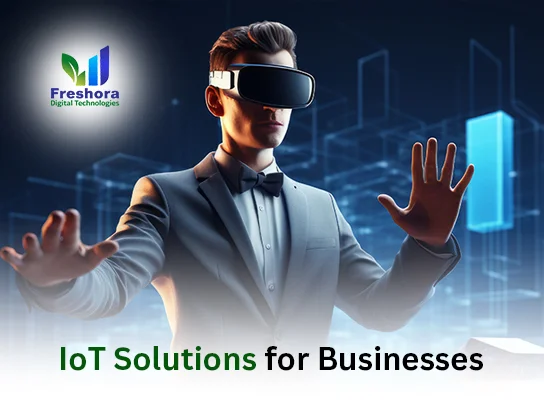
The Internet of Things (IoT) is no longer a futuristic concept it’s a reality transforming how businesses operate. From smart factories to connected offices, IoT technology enables companies to collect real-time data, enhance efficiency, and make smarter decisions.
In 2025, IoT applications for companies are helping enterprises improve productivity, reduce costs, and offer better customer experiences. Let’s explore how businesses across industries are leveraging IoT to drive innovation and growth.
The Internet of Things refers to a network of interconnected devices that communicate and exchange data through the internet.
These devices ranging from sensors and wearables to industrial machines—collect and share real-time information that helps organizations automate tasks and make informed decisions.
IoT has revolutionized the manufacturing industry through Industrial IoT (IIoT). Smart sensors monitor machines, detect malfunctions, and optimize production processes automatically.
Example:
Factories using IoT-based predictive maintenance can detect potential machine failures early, reducing downtime and repair costs.
Retailers are using IoT to improve in-store operations and create personalized shopping experiences.
Example:
Smart shelves track inventory levels, while beacon technology sends targeted offers to customers’ smartphones when they enter the store.
The healthcare industry benefits significantly from IoT devices such as wearables, smart medical equipment, and remote monitoring tools.
Example:
IoT-enabled devices can track patient vitals in real-time and alert doctors to abnormalities instantly, saving lives and improving care quality.
IoT plays a crucial role in optimizing supply chain visibility and logistics operations.
Example:
GPS-enabled sensors monitor fleet performance, fuel efficiency, and delivery routes, allowing real-time tracking of shipments.
Farmers use IoT technology to collect data about soil conditions, weather patterns, and crop health.
Example:
IoT-based smart irrigation systems automatically adjust water supply based on soil moisture data, improving yield and conserving resources.
Businesses are increasingly adopting IoT for energy efficiency and sustainability goals.
Example:
Smart meters and IoT sensors monitor energy consumption and optimize power usage in factories, offices, and data centres.
Governments and companies collaborate to build smart city infrastructure using IoT sensors for traffic control, waste management, and public safety.
Example:
IoT-enabled streetlights adjust brightness based on movement, reducing energy waste and improving urban safety.
Financial institutions use IoT to enhance customer service, detect fraud, and improve security systems.
Example:
Connected ATMs, smart wearables, and biometric systems help banks deliver seamless, secure, and personalized experiences to customers.
IoT devices make workplaces smarter, safer, and more efficient.
Example:
Smart lighting, HVAC systems, and occupancy sensors optimize energy use, while IoT-connected devices enable smoother remote collaboration.
· Increased efficiency and automation
· Reduced operational costs
· Real-time data and insights
· Better resource utilization
· Enhanced customer engagement
· Improved decision-making through analytics
While IoT offers immense potential, businesses must address challenges like data security, integration complexity, and network reliability.
Investing in secure IoT infrastructure and skilled professionals ensures successful implementation and long-term benefits.
The Internet of Things is redefining how companies connect, communicate, and operate. From manufacturing and healthcare to retail and logistics, IoT applications are driving a smarter, more efficient, and data-driven future.
Businesses that invest in IoT today will lead tomorrow’s connected economy.

Summary: Paid campaigns improve high-intent lead generation by targeting ready-to-buy audiences, inc... Read More
Introduction Business growth depends not only on adopting technology but on aligning it with busine... Read More
Summary: Smart analytics enhances business growth planning by delivering predictive insights, trend... Read More
Our expert will call you shortly to understand your needs and help grow your business.
Get exclusive digital marketing tips, SEO insights, web & app updates, and job opportunities delivered straight to your inbox.
Join our WhatsApp channel for instant digital marketing tips, SEO insights, web & app updates, and latest job opportunities.
Join NowFreshora Digital Technologies proudly serves businesses across Tiruchirappalli (Trichy), including Cantonment, Puthur, Thillai Nagar, Palakarai, Subramaniyapuram, Mela Chinthamani, Woraiyur, KK Nagar, Karumandapam, Crawford, Edamalaipatti Pudur (EMP), Kattur, Airport Area, Ariyamangalam, Panjappur, Thuvakudi, Tiruverumbur, BHEL Township, Srirangam, Thiruvanaikaval, Samayapuram, No.1 Tollgate, Central Bus Stand Area, and Chathiram Bus Stand Area.
We also serve clients across Tamil Nadu, India, and globally in Singapore, the UAE, Saudi Arabia, Canada, Australia, the United Kingdom, and the United States, delivering innovative Website Development, Mobile App Development, Software Development, SEO, Google Business Profile Management, and Digital Marketing solutions that help businesses grow and succeed in the digital world.


