
Contact our team for professional guidance and solutions.
Summary : Mobile-first SEO improves website rankings by ensuring responsive design, fast loading speed, and mobile-friendly user experiences. Optimised mobile websites perform better on search engines.
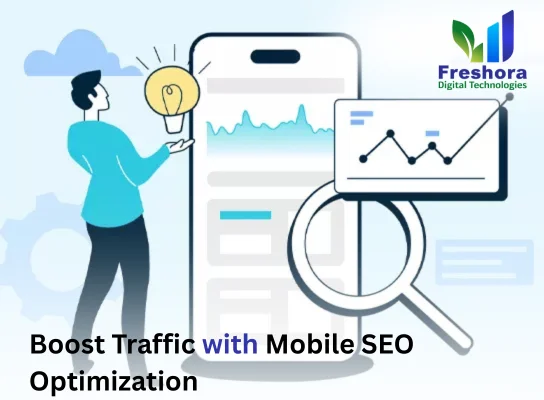
Mobile first SEO has become one of the most important ranking factors in recent years. Since most users now browse the internet through mobile devices, Google has shifted to mobile first indexing. This means Google primarily uses the mobile version of your website to decide ranking, indexing and visibility. If your website is not optimized for mobile, you risk losing traffic, customers and ranking positions.
In this blog, you will learn how to optimize your website for mobile first SEO and improve both your user experience and search result performance.
Responsive design ensures your website adjusts itself to fit screens of all sizes. This makes your site look clean and easy to use on mobile phones, tablets and desktops.
A responsive design helps:
• Improve user experience
• Reduce bounce rate
• Make navigation easier
• Support better ranking
A mobile friendly layout is essential for modern SEO
Speed is a major ranking factor, especially on mobile devices. Slow websites push users away before they see your content.
Improve mobile speed by:
• Compressing images
• Reducing unnecessary code
• Using lightweight themes
• Enabling caching
• Choosing fast hosting
Fast mobile loading keeps users engaged and improves SEO strength.
3. Simplify Mobile Navigation
Mobile users want fast access to information. Complicated menus and crowded layouts make navigation difficult.
To optimize mobile navigation:
• Use a simple menu
• Add clear categories
• Use large, easy to tap buttons
• Keep header design clean
Easy navigation encourages users to stay longer.
Small screens require clear and readable text. If users have to zoom in to read your content, they leave quickly.
Improve readability by:
• Using larger fonts
• Keeping paragraphs short
• Using bullet points
• Adding enough spacing
Readable content improves both user experience and SEO performance.
Pop ups can block content on mobile screens and frustrate users. Google discourages intrusive pop ups because they affect usability.
To improve UX:
• Use minimal pop ups
• Keep them small
• Ensure they close easily
• Avoid blocking the main content
A clean mobile experience helps your ranking.
Large image files slow down mobile loading. Optimized images help your website run smoothly on small screens.
Optimize images by:
• Resizing to correct dimensions
• Using WebP format
• Compressing file size
• Adding alt text
Mobile optimized images boost performance.
Small buttons make it difficult for users to take action. Buttons must be large enough for comfortable tapping on mobile screens.
To improve tap targets:
• Use proper button size
• Add enough spacing
• Avoid placing buttons too close
• Keep actions clear
Better tap targets improve conversions and engagement.
Too many scripts can slow down your website and affect mobile performance. Plugins also add extra load on your website.
To optimize:
• Remove unnecessary plugins
• Reduce external scripts
• Combine files where possible
A lighter website results in faster performance.
Accelerated Mobile Pages, also known as AMP, load very quickly on mobile devices. They improve user experience and increase visibility.
AMP benefits:
• Faster loading
• Higher engagement
• Better ranking potential
AMP is useful for blogs and informational websites.
Many mobile users search using voice. Voice search queries are usually longer and conversational.
Optimize for voice by:
• Using natural language
• Adding question based headings
• Including long tail keywords
• Writing clear and direct answers
Voice search optimization improves mobile SEO.
You must test your website frequently to ensure it is fully optimized for mobile users.
Use tools like:
• Google Mobile Friendly Test
• Lighthouse report
• PageSpeed Insights
Regular testing helps you fix new issues early.
Mobile first SEO is essential because most users now search on mobile devices. A website that performs well on mobile gets more visibility, more traffic and better conversions.
Mobile first SEO helps you:
• Improve ranking
• Increase traffic
• Enhance user experience
• Build credibility
• Reduce bounce rate
• Boost conversions
Mobile optimization is not optional. It is a requirement for SEO success.
If you want to optimize your website for mobile first SEO and improve your search ranking, Freshora Digital Technologies is here to help. Our expert team enhances your mobile layout, improves loading speed, fixes technical issues and ensures your website delivers a smooth experience across all devices. With Freshora, your website becomes more mobile friendly, more visible and better suited for long term SEO growth. We help your business stay ahead in a mobile driven world.

Executive Summary Local SEO has become one of the most important digital marketing strategies for s... Read More

In the vibrant city of Tiruchirappalli, where culture and tradition meet, photography studios often... Read More
Blog Summary: In the competitive digital landscape of Trichy, your website's visibility is the found... Read More
Our expert will call you shortly to understand your needs and help grow your business.
Get exclusive digital marketing tips, SEO insights, web & app updates, and job opportunities delivered straight to your inbox.
Join our WhatsApp channel for instant digital marketing tips, SEO insights, web & app updates, and latest job opportunities.
Join NowFreshora Digital Technologies proudly serves businesses across Tiruchirappalli (Trichy), including Cantonment, Puthur, Thillai Nagar, Palakarai, Subramaniyapuram, Mela Chinthamani, Woraiyur, KK Nagar, Karumandapam, Crawford, Edamalaipatti Pudur (EMP), Kattur, Airport Area, Ariyamangalam, Panjappur, Thuvakudi, Tiruverumbur, BHEL Township, Srirangam, Thiruvanaikaval, Samayapuram, No.1 Tollgate, Central Bus Stand Area, and Chathiram Bus Stand Area.
We also serve clients across Tamil Nadu, India, and globally in Singapore, the UAE, Saudi Arabia, Canada, Australia, the United Kingdom, and the United States, delivering innovative Website Development, Mobile App Development, Software Development, SEO, Google Business Profile Management, and Digital Marketing solutions that help businesses grow and succeed in the digital world.


