
Contact our team for professional guidance and solutions.
Summary: Artificial intelligence improves business operations by automating tasks, enhancing decision-making, and delivering personalized customer experiences across industries.It strengthens security, operational efficiency, predictive analytics, innovation, scalability, and digital transformation while reducing costs and improving accuracy.Businesses adopting AI technologies achieve stronger competitiveness, smarter workflows, and sustainable long-term growth.
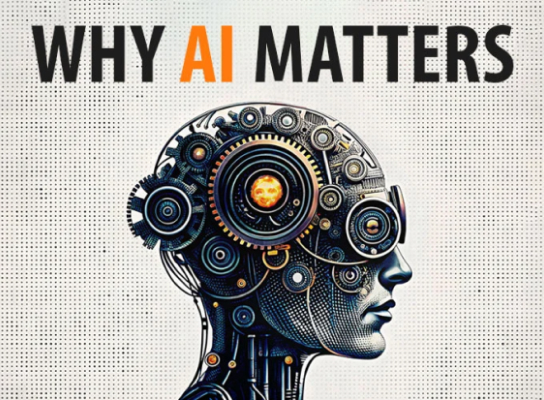
Artificial Intelligence (AI) has moved beyond being a futuristic concept and has now become the foundation of modern business transformation. In 2025, every industry whether it is healthcare, retail, manufacturing, finance, logistics, education, or entertainment is integrating AI-driven technologies to improve efficiency, accuracy, customer satisfaction, and long-term growth. The rise of AI-powered automation, predictive analytics, machine learning applications, and smart decision-making tools has made AI essential for businesses that want to stay competitive in a rapidly evolving digital world.
Traditional processes are no longer enough to meet customer expectations or manage large amounts of data. AI helps industries analyse information faster, reduce operational costs, automate repetitive tasks, and make better decisions with real-time insights. More importantly, AI brings innovation, helping businesses create personalized experiences, develop smarter workflows, and deliver solutions that are faster, more secure, and more reliable.
This article explains why AI matters for every industry, highlighting the key advantages and long-term value AI brings across different business sectors.
Automation is one of the biggest advantages of AI, helping industries save time and reduce manual labour.
Examples include:
· Manufacturing robots that automate assembly and quality checks.
· Retail systems that manage billing and stock updates automatically.
· Healthcare tools that digitize records and schedule appointments.
By reducing human effort, AI increases productivity and allows teams to focus on meaningful work.
With AI analytics, industries can make decisions faster and with more accuracy.
Examples include:
· Financial institutions analysing market trends instantly.
· Logistics companies predicting delivery times.
· Retailers understanding customer buying patterns.
AI-driven insights reduce risks and support smarter strategies.
AI helps businesses deliver services customers truly want.
Examples include:
· E-commerce websites recommending products based on past behaviour.
· Banks offering personalized financial plans.
· Streaming platforms suggesting movies and music automatically.
Personalized experiences increase satisfaction and loyalty.
AI minimizes errors, reduces waste, and optimizes resource usage.
Examples include:
· Energy companies using AI to manage power consumption.
· Manufacturers reducing material waste through predictive maintenance.
· Retailers automating inventory to avoid overstocking.
Lower costs improve profit margins and long-term stability.
Businesses today face major cybersecurity threats, and AI helps detect risks instantly.
Examples include:
· AI systems identifying unusual login patterns.
· Fraud detection tools monitoring financial transactions.
· Smart firewalls analysing suspicious activity.
AI ensures better protection and reduces the chance of data breaches.
Industries use AI to experiment, test, and innovate faster than ever.
Examples include:
· Healthcare firms discovering drugs with AI simulations.
· Automobile companies designing self-driving systems.
· Fashion brands predicting upcoming style trends.
AI speeds up development while reducing trial-and-error costs.
AI tools make digital teamwork easier and more productive.
Examples include:
· Virtual assistants scheduling tasks.
· AI transcription tools recording and summarizing meetings.
· Smart project management systems tracking team progress.
These tools keep teams connected and efficient regardless of location.
Predictive analytics powered by AI helps industries stay ahead.
Examples include:
· Retailers forecasting seasonal demand.
· Entertainment companies predicting content preferences.
· Banks analysing investment risk before market shifts.
Trend prediction gives industries a major competitive advantage.
Industries rely on AI to monitor performance and ensure high standards.
Examples include:
· Manufacturers using computer vision to check product defects.
· Food industries tracking freshness with sensors.
· Tech companies testing software through AI-driven automation.
Quality improvements reduce returns, complaints, and downtime.
AI is essential for long-term growth in all industries.
Examples include:
· Automated workflows helping companies scale effortlessly.
· AI-enhanced cloud systems supporting large datasets.
· Machine learning tools improving with time and usage.
AI ensures businesses stay competitive and ready for future technologies.
AI is essential because it:
· Increases efficiency
· Reduces costs
· Strengthens security
· Enables real-time decision-making
· Enhances customer experience
· Supports automation
· Drives continuous innovation
· Improves accuracy
· Fuels digital transformation
· Prepares industries for future technologies
Every industry benefits from AI because it brings intelligence, speed, and reliability to every process.
AI matters for every industry because it transforms operations, improves accuracy, strengthens security, accelerates innovation, and enables long-term growth. In 2025, businesses that adopt AI-driven tools and strategies will lead their market, while those that lag risk falling behind in a technology-first world.
Freshora Digital Technologies helps organizations integrate AI into their workflows through advanced automation tools, predictive analytics systems, AI-powered decision engines, and custom AI development solutions. Their expertise ensures smarter operations, faster growth, and stronger digital transformation.



Summary: This article explains AI integration services Trichy, covering automation, machine learning... Read More
Summary: AI-powered insights improve organisational planning by analysing large data sets and identi... Read More
Summary: AI integration improves digital service innovation by enabling intelligent automation, fast... Read More
Our expert will call you shortly to understand your needs and help grow your business.
Get exclusive digital marketing tips, SEO insights, web & app updates, and job opportunities delivered straight to your inbox.
Join our WhatsApp channel for instant digital marketing tips, SEO insights, web & app updates, and latest job opportunities.
Join Now

