Contact our team for professional guidance and solutions.
Summary: Emerging technologies in 2025 such as AI, IoT, blockchain, 5G, AR/VR, quantum computing, and edge computing are transforming business operations and customer experiences.These innovations improve automation, connectivity, security, efficiency, and decision-making across industries.Businesses adopting advanced technologies early achieve stronger competitiveness, operational scalability, innovation, and sustainable long-term digital growth.
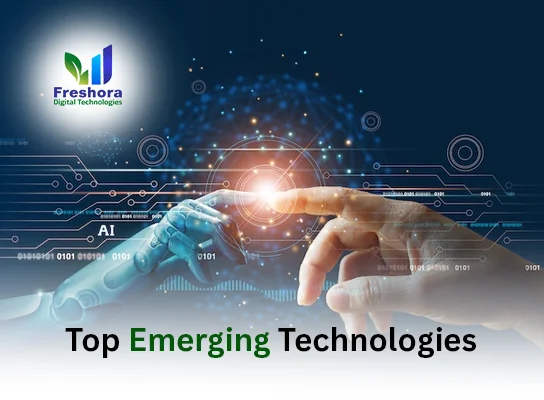
The technology landscape is evolving faster than ever, and staying ahead means understanding the top emerging technologies to watch in 2025. Businesses that adopt these innovations early gain a competitive edge, improve efficiency, and deliver better experiences to their customers.
In this article, we explore the most promising technologies, their applications, and why your business should pay attention to them.
AI and ML continue to dominate the tech scene, transforming industries from healthcare to finance. In 2025, businesses are leveraging AI for predictive analytics, personalized customer experiences, and automated decision-making.
Example:
E-commerce companies use AI to recommend products based on browsing history, increasing sales and customer satisfaction.
IoT is no longer limited to smart homes. In 2025, IoT in business helps organizations collect real-time data, optimize operations, and reduce costs. Smart sensors, connected devices, and industrial IoT are driving efficiency across sectors.
Example:
Manufacturing plants use IoT sensors to monitor equipment performance, preventing costly downtime.
Blockchain is reshaping how data is stored, verified, and shared. Beyond cryptocurrency, blockchain for business applications ensures transparency, security, and trust in supply chains, finance, and healthcare.
Tip:
Consider blockchain solutions for secure transactions, digital contracts, and tamper-proof record keeping.
5G is set to revolutionize connectivity with faster speeds, lower latency, and improved reliability. Businesses can leverage 5G for smart cities, autonomous vehicles, AR/VR applications, and enhanced mobile experiences.
Example:
Healthcare providers use 5G-enabled devices for remote surgeries and real-time patient monitoring.
AR and VR are moving beyond gaming into business applications. Companies are using these technologies for training, immersive marketing, and virtual product demonstrations.
Example:
Real estate firms offer VR property tours, allowing clients to explore homes without visiting in person.
6. Low-Code and No-Code Platforms
Low-code and no-code platforms empower businesses to build apps and automate workflows without extensive programming knowledge. This accelerates innovation and reduces dependence on IT teams.
Tip:
Implement a no-code solution to streamline internal processes or quickly develop customer-facing applications.
Quantum computing is no longer science fiction. Emerging quantum computing applications promise to solve complex problems in seconds that would take classical computers years. Industries like finance, healthcare, and logistics are preparing to leverage this technology.
Example:
Financial firms use quantum algorithms to optimize investment portfolios in real-time.
RPA allows businesses to automate repetitive tasks, such as invoice processing, HR onboarding, and customer support workflows. This improves efficiency, reduces errors, and frees employees to focus on strategic tasks.
As technology adoption grows, cybersecurity remains critical. In 2025, businesses are investing in AI-driven threat detection, multi-factor authentication, and zero-trust security frameworks to protect sensitive data.
Tip:
Regularly update systems and educate employees on cybersecurity best practices to reduce risks.
Edge computing brings data processing closer to the source, reducing latency and improving real-time decision-making. This is crucial for IoT devices, autonomous vehicles, and remote monitoring applications.
Example:
Smart factories process sensor data locally using edge computing, improving response times and efficiency.
The top emerging technologies to watch in 2025 are transforming the way businesses operate, innovate, and compete. From AI and IoT to blockchain, AR/VR, and quantum computing, these innovations offer enormous opportunities for growth and efficiency.
Staying informed and adopting these technologies early can help your business gain a competitive advantage, streamline operations, and deliver exceptional experiences to your customers.



Summary: Endpoint protection improves IT system reliability by securing devices such as compute... Read More

Summary:Reels help businesses stay relevant online by supporting trend-driven storytelling, consiste... Read More
Summary:Mobile apps improve customer engagement by enabling direct communication, personalised exper... Read More
Our expert will call you shortly to understand your needs and help grow your business.
Get exclusive digital marketing tips, SEO insights, web & app updates, and job opportunities delivered straight to your inbox.
Join our WhatsApp channel for instant digital marketing tips, SEO insights, web & app updates, and latest job opportunities.
Join Now

