
Contact our team for professional guidance and solutions.
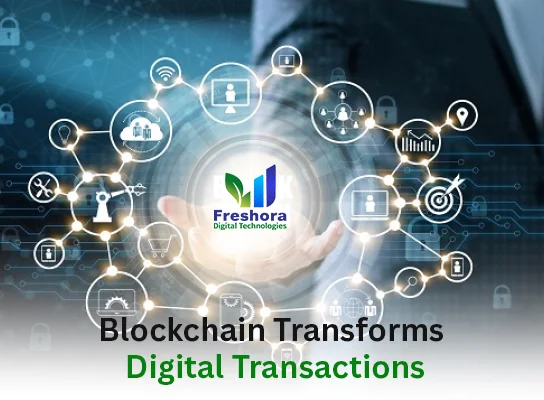
Digital transactions have become the foundation of modern business, supporting everything from online payments and supplier settlements to digital contracts and cross-border commerce. However, traditional transaction systems often rely on intermediaries, lengthy verification processes, and centralized databases that can introduce delays, security risks, and higher operational costs. Blockchain technology transforms digital transactions by enabling secure, transparent, decentralized, and near real-time exchanges of value and information. Through cryptographic validation and distributed ledgers, blockchain helps businesses improve transaction security, reduce processing time, and build greater confidence among customers and business partners.
This guide explores How Blockchain Transforms Digital Transactions, explains Blockchain Digital Transactions, examines Secure Blockchain Payments, discusses Blockchain Payment Solutions, highlights Digital Transaction Security, and explains how a Blockchain Course in Trichy helps professionals understand this transformative technology.
Blockchain transforms digital transactions by creating decentralized, transparent, and cryptographically secure transaction records that reduce dependence on intermediaries, accelerate verification, improve security, strengthen traceability, and increase trust between all parties involved in digital exchanges.
Digital transactions have evolved far beyond simple online payments. Today, businesses exchange invoices, contracts, purchase orders, digital assets, customer information, and financial settlements across multiple platforms and international markets. As transaction volumes continue to increase, organizations require systems that are faster, more secure, transparent, and capable of supporting global business operations.
Traditional transaction systems often involve several intermediaries, manual verification processes, and centralized databases. These approaches can create processing delays, reconciliation challenges, security concerns, and additional operational costs.
Blockchain introduces a fundamentally different model.
Instead of relying on a central authority to validate every transaction, blockchain uses distributed ledger technology where authorized participants verify and record transactions collectively. Each transaction is encrypted, time-stamped, permanently recorded, and linked to previous records, making unauthorized modification extremely difficult.
Global adoption reflects this growing confidence in blockchain-powered transactions:
These developments explain why organizations are increasingly exploring blockchain for digital payment systems and enterprise transactions.
Business leaders frequently ask:
The answer lies in blockchain's ability to create trusted, decentralized transaction environments that improve both speed and reliability.
Organizations increasingly depend on fast, secure, and transparent transaction systems.
Blockchain supports:
Efficient transaction systems directly improve business performance and customer confidence.
Many businesses continue facing operational issues within conventional payment and transaction systems.
Common challenges include:
Blockchain addresses these challenges through decentralized transaction verification.
Organizations are expanding blockchain adoption across payment and transaction ecosystems.
Blockchain now supports:
Businesses increasingly view blockchain as a strategic transaction infrastructure rather than simply a financial technology.
Blockchain Digital Transactions use distributed ledger technology to securely record, validate, and permanently store digital exchanges without relying exclusively on centralized intermediaries.
Organizations use blockchain transactions for:
Every authorized participant accesses the same verified transaction history.
Blockchain payment systems improve transaction security by using:
These features reduce fraud while improving transaction confidence.
Businesses implement blockchain payment solutions to:
Modern payment systems become more efficient and reliable.
Blockchain improves transaction security through:
These capabilities strengthen the security of every digital transaction.
Digital transactions perform best when they are integrated into a secure and connected business ecosystem. At Freshora Digital Technologies, we help organizations modernize payment workflows, transaction management, and digital business operations using enterprise blockchain technologies.
Our approach includes:
Our objective is to help businesses create trusted transaction ecosystems that improve operational efficiency while strengthening customer and partner confidence.
Digital transactions are no longer limited to online payments. Modern organizations exchange invoices, contracts, digital assets, healthcare records, shipping documents, and financial settlements every day. Blockchain enables these transactions to become faster, more transparent, and significantly more secure.
Banks and financial institutions use blockchain to:
Blockchain creates trusted financial transactions without excessive manual verification.
Retail businesses leverage blockchain to:
Customers gain greater confidence when every transaction is transparent and verifiable.
Supply chain organizations use blockchain for:
Blockchain reduces delays caused by document verification and improves coordination among logistics partners.
Healthcare organizations apply blockchain to:
Blockchain helps healthcare providers improve accuracy while protecting sensitive financial information.
Real estate businesses benefit by:
Property transactions become more efficient while reducing documentation disputes.
|
Traditional Digital Transactions |
Blockchain Digital Transactions |
|
Multiple intermediaries |
Peer-to-peer transaction validation |
|
Manual payment verification |
Automated cryptographic verification |
|
Delayed settlements |
Faster transaction confirmation |
|
Centralized payment databases |
Distributed ledger architecture |
|
Limited transaction visibility |
Transparent transaction history |
|
Higher reconciliation effort |
Shared synchronized records |
|
Greater fraud exposure |
Tamper-resistant transaction records |
|
Separate audit systems |
Built-in transaction traceability |
Organizations adopting blockchain improve transaction speed while strengthening trust across the entire payment ecosystem.
Businesses planning to modernize their payment infrastructure should evaluate current transaction processes.
Ask the following questions:
If several answers are Yes, blockchain-based transaction systems may significantly improve operational performance.
Blockchain offers far more than cryptocurrency.
Organizations should evaluate blockchain for contracts, payments, procurement, digital identity, logistics, healthcare, and enterprise transactions.
Successful implementations integrate blockchain with ERP, accounting software, CRM, and payment platforms instead of replacing existing infrastructure completely.
Businesses should optimize transaction workflows before introducing blockchain technology.
Efficient processes deliver better implementation outcomes.
Payment systems must comply with financial regulations, taxation requirements, and industry standards.
Compliance planning should accompany every blockchain initiative.
Organizations should also evaluate transparency, audit readiness, customer confidence, fraud reduction, and operational efficiency.
Digital transaction technologies continue evolving rapidly.
Emerging developments include:
These innovations will reshape how organizations exchange value in the digital economy.
Modern businesses require payment systems that are secure, scalable, and seamlessly connected with day-to-day operations. At Freshora Digital Technologies, we help organizations transform transaction workflows by integrating blockchain with enterprise platforms to create efficient and trusted digital ecosystems.
Our blockchain transaction services include:
Our objective is to help businesses establish intelligent transaction ecosystems that improve financial accuracy, strengthen stakeholder confidence, and support sustainable digital growth.
Begin blockchain implementation with payment processes where transparency, traceability, and faster verification deliver measurable business value.
Connect blockchain technology with finance, ERP, CRM, procurement, and accounting systems to create a unified transaction environment.
Strengthen authentication, encryption, and access controls to ensure every blockchain-enabled transaction remains secure throughout its lifecycle.
Track settlement times, reconciliation accuracy, fraud reduction, and operational efficiency to measure business outcomes continuously.
Design flexible transaction architectures that can support digital currencies, tokenized assets, smart contracts, and future financial innovations.
How does blockchain transform digital transactions?
Blockchain transforms digital transactions by replacing centralized verification with decentralized validation, improving security, transparency, speed, and transaction accuracy.
What are Blockchain Payment Solutions?
Blockchain Payment Solutions enable secure digital payments, automated settlements, cross-border transactions, smart contract execution, and transparent financial record management.
Why are blockchain transactions secure?
Blockchain transactions are protected through cryptographic encryption, distributed ledgers, consensus mechanisms, digital signatures, and immutable transaction records.
Can businesses use blockchain for digital payments?
Yes. Businesses can use blockchain for supplier payments, customer transactions, international settlements, digital contracts, financial reconciliation, and enterprise payment automation.
Which industries benefit from blockchain transactions?
Banking, retail, healthcare, logistics, manufacturing, real estate, government, insurance, and supply chain organizations benefit from blockchain-enabled digital transaction systems.
Across Tamil Nadu, businesses are increasingly embracing digital commerce and electronic payment systems as customer expectations continue to evolve. In Trichy, manufacturers, retailers, educational institutions, healthcare providers, logistics companies, and professional service firms are exploring blockchain to improve payment transparency, automate transaction verification, strengthen financial security, and simplify business settlements. Organizations that modernize their transaction infrastructure today are building stronger digital ecosystems capable of supporting future business expansion and customer trust.
How does blockchain transform digital transactions?
Blockchain transforms digital transactions by creating secure, decentralized, and transparent transaction records that improve verification speed, reduce fraud, and strengthen trust between transaction participants.
What are Blockchain Digital Transactions?
Blockchain Digital Transactions are digitally verified exchanges of payments, contracts, assets, or business information recorded on distributed ledgers that ensure transparency, traceability, and security.
What are Secure Blockchain Payments?
Secure Blockchain Payments use cryptographic validation, decentralized networks, and immutable transaction records to improve payment security while reducing processing delays and fraud.
How do Blockchain Payment Solutions benefit businesses?
Blockchain Payment Solutions improve operational efficiency by accelerating settlements, reducing reconciliation efforts, increasing payment transparency, strengthening compliance, and supporting digital commerce.
Where can professionals learn blockchain transaction technologies?
Students and professionals can develop blockchain transaction expertise through structured training, enterprise projects, practical implementation, and industry-focused learning programs offered by Freshora Digital Technologies.
Digital transactions are at the heart of today's connected economy, and businesses require systems that are secure, efficient, and capable of supporting continuous growth. Blockchain technology transforms traditional transaction models by enabling decentralized verification, transparent record keeping, automated smart contracts, and enhanced security. These capabilities help organizations reduce operational complexity, strengthen stakeholder confidence, and deliver faster, more reliable digital services.
At Freshora Digital Technologies, we help businesses modernize digital transactions through SmartPro™ integrations, enterprise blockchain platforms, secure payment architectures, and intelligent digital transformation strategies. By combining blockchain innovation with practical business solutions, we enable organizations to build trusted transaction ecosystems that support operational excellence and long-term digital success.
Blog Summary Every successful business reaches a point where hard work alone is no longer enough. G... Read More
Summary: Blockchain technology transforms modern industries through secure data management, tr... Read More
Blog Summary Blockchain technology has evolved into a powerful business innovation platform that ex... Read More
Our expert will call you shortly to understand your needs and help grow your business.
Get exclusive digital marketing tips, SEO insights, web & app updates, and job opportunities delivered straight to your inbox.
Join our WhatsApp channel for instant digital marketing tips, SEO insights, web & app updates, and latest job opportunities.
Join NowFreshora Digital Technologies proudly serves businesses across Tiruchirappalli (Trichy), including Cantonment, Puthur, Thillai Nagar, Palakarai, Subramaniyapuram, Mela Chinthamani, Woraiyur, KK Nagar, Karumandapam, Crawford, Edamalaipatti Pudur (EMP), Kattur, Airport Area, Ariyamangalam, Panjappur, Thuvakudi, Tiruverumbur, BHEL Township, Srirangam, Thiruvanaikaval, Samayapuram, No.1 Tollgate, Central Bus Stand Area, and Chathiram Bus Stand Area.
We also serve clients across Tamil Nadu, India, and globally in Singapore, the UAE, Saudi Arabia, Canada, Australia, the United Kingdom, and the United States, delivering innovative Website Development, Mobile App Development, Software Development, SEO, Google Business Profile Management, and Digital Marketing solutions that help businesses grow and succeed in the digital world.
